Land behind the doctors surgery.
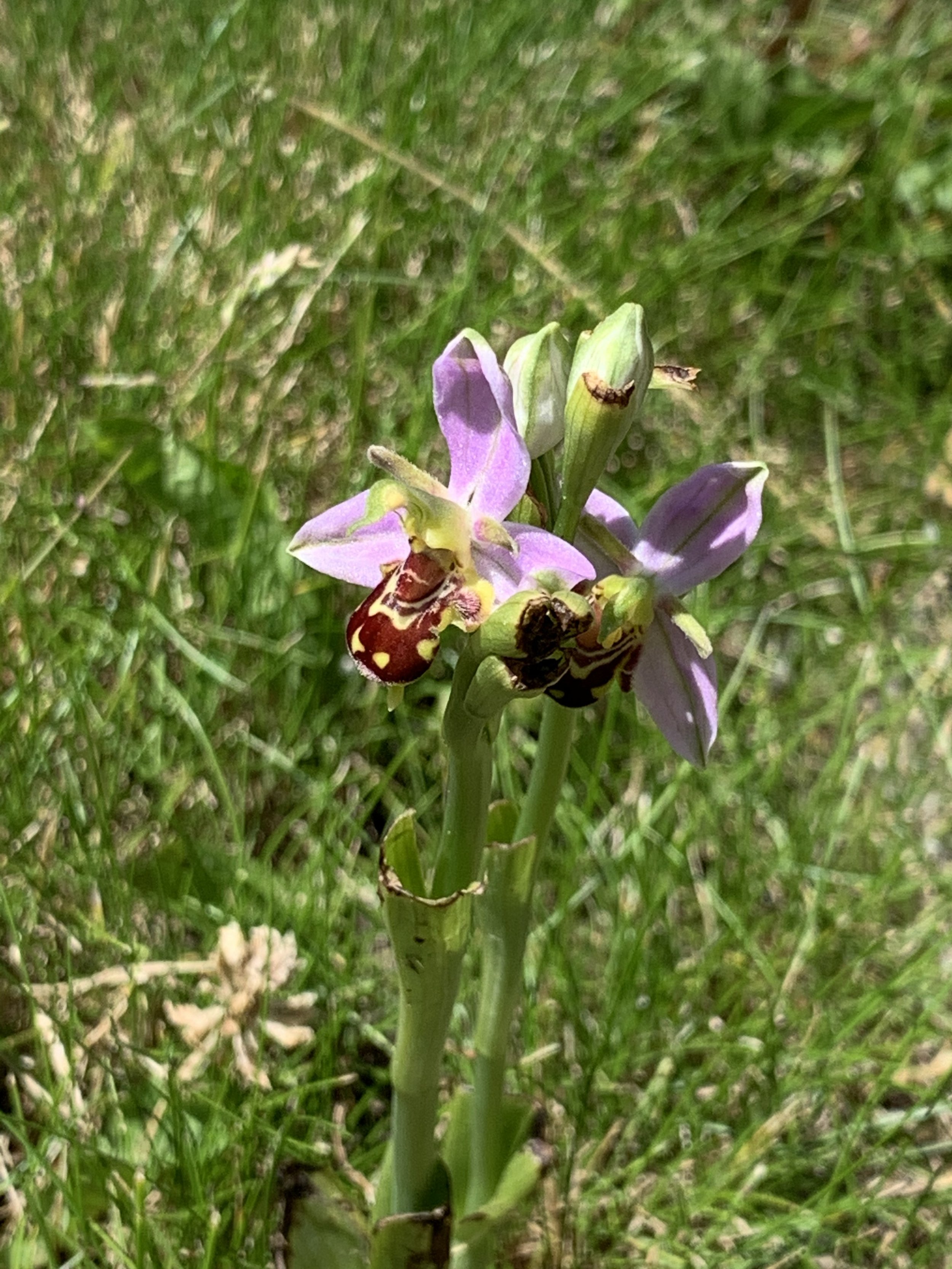
This week I have written to neighbours regarding the possible development of the land behind the doctors surgery, following a letter I have sent to Great Massingham Parish Council. A copy of the letter to neighbours is below, followed by a full copy of my email to the Parish Council which highlights my concerns from a nature point of view:
Dear Neighbour,
I wanted to make you aware that Great Massingham Parish Council is looking to have the land behind the doctors surgery (Between Charles Dewar Close and Sunnyside Road) valued, ahead of it possibly being developed for housing.
I live backing onto the site, and I have written to the Parish Council to raise my concerns from a conservation point of view. I have attached a copy of my letter so you can see what I have sent.
I am particularly concerned about the impact on wildlife and biodiversity, but I know many residents will have other concerns too, so I wanted to let everyone who borders the site know at this early stage.
Two things I think will affect us all directly:
1. Traffic and safety. The only access to that land is through our residential streets. If building work goes ahead, that will mean heavy lorries coming in and out for months during construction, plus a lot more cars afterwards. With so many families and children playing out in the streets, I am worried about safety.
2. Loss of open space. A lot of local children use that area to play and enjoy nature. It is one of the few wild, open spaces we have left in the village.
You may have your own concerns as well — whether that is parking, noise and dust during building work, pressure on the doctors and school, drainage and surface water, or loss of wildlife — but if you put them in your own words to the clerk it will carry much more weight than a standard letter.
At the moment nothing has been formally applied for, which is why I thought it was important to flag it now while it is still early.
If you do have concerns, I would really encourage you to write to the Parish Council Clerk so they are on record:
Email: clerk@greatmassingham-pc.gov.uk
Please include your name and address and ask for your comments to be noted in the minutes.
If you want to chat about it, please feel free to contact me on 07756 643393 or email me on enquiries@aw-pr.com
Kindest,
Andrew.
Email to Great Massingham Parish Council - sent 18th July 2026:
Andrew Waddison BEM
By Email.
To: The Chair and Clerk,
Great Massingham Parish Council
cc. Copies of this letter will be sent to the following - BCKLWN Planning & Ecology, NCC Natural Environment Team, Natural England Norfolk & Suffolk Area Team, Norfolk Wildlife Trust, Cllr Alistair Beales, Cllr Jim Moriarty, Cllr Lee Jarvis.
July 2026
Dear Sir / Madam,
Re: Proposed Development - Land Behind the Doctors’ Surgery, Great Massingham - Early Stage Ecological Concerns and Notification of Independent Surveys.
I am writing to you as a resident whose property abuts to the land you refer to as 'land behind the doctors', which I understand the Parish Council is currently seeking to have valued ahead of potential future residential development.
I wish to formally register my serious concerns at this very early stage regarding the potential environmental, wildlife and biodiversity impacts of any development on this site.
The land in its current form is unimproved grassland and wildflower meadow. It is not amenity grassland or brownfield land. It provides open foraging habitat, commuting corridors, and shelter that supports a wide range of species. The loss of such habitat would be significant in a village context.
This is particularly pertinent given the current legal framework. Under Schedule 7A of the Town and Country Planning Act 1990 (as inserted by the Environment Act 2021), all major developments are now required to deliver a minimum of 10% Biodiversity Net Gain (BNG), maintained for at least 30 years. Achieving a genuine 10% net gain will be extremely challenging on a species-rich grassland site such as this.
As a public authority, the Parish Council is subject to the strengthened biodiversity duty under Section 40A of the NERC Act 2006, to conserve and enhance biodiversity and to consider what action it can take to further the conservation of priority habitats and species.
To ensure that I am satisfied that an accurate ecological baseline exists for the site, I shall be continuing independent ecological surveys over the coming weeks and months and will make my data available to the Parish Council and to the Local Planning Authority in due course, should they require it. The reason for this is that, as you will be aware, the site in question was decimated and stripped of trees two years ago, and it was clear that required surveys were not undertaken correctly, or even undertaken at all. It seems to me that was only due to the public backlash and articles in the press that any development was postponed at that stage.
As the Parish Council is already aware from my previous correspondence, the site supports a colony of Bee Orchids (Ophrys apifera). While not listed on Schedule 8 of the Wildlife and Countryside Act 1981, it is an indicator species of high-quality, unimproved, low-nutrient grassland - a habitat type that has declined by over 97% in the UK since the 1930s. It is included as a notable species in the Norfolk Local Biodiversity Action Plan and its presence is a strong indicator that the grassland is of elevated botanical value.
The combination of indicator species, low nutrient status and lack of agricultural improvement suggests the grassland may qualify as Lowland Meadow, a Habitat of Principal Importance under Section 41 of the NERC Act, and potentially as a County Wildlife Site under Norfolk criteria.
The site is also of significant ornithological importance. Throughout the year it supports a range of farmland birds that are now in steep national decline. This includes breeding and foraging Eurasian Skylark (Alauda arvensis), Common Linnet (Linaria cannabina) and Yellowhammer (Emberiza citrinella). I record these birds on the site daily. All three species are Red-listed on the Birds of Conservation Concern 5, are Species of Principal Importance under Section 41 of the NERC Act 2006, and are Norfolk Biodiversity Action Plan priorities. Skylark and Linnet in particular require open, undisturbed grassland for ground nesting and for feeding on wildflower seed heads. Any loss or disturbance, particularly during the breeding season (March-August) would constitute a significant ecological impact.
In addition, on 25th April 2026, I recorded a singing male Eurasian Nightingale (Luscinia megarhynchos) from the boundary hedgerow, approximately 50 metres from the site. The record was verified and shared with the landowner and relevant bodies. The song was recorded from a distance to avoid any disturbance. Nightingale is Red-listed, is a Species of Principal Importance under Section 41 of the NERC Act, and is listed on Schedule 1 of the Wildlife and Countryside Act 1981, which gives it special protection from disturbance while nesting. Nationally it has declined by over 90% and is now extremely scarce in west Norfolk. The presence of a singing male in this habitat is indicative of a potential breeding territory and represents a material ecological constraint that must be fully assessed.
Furthermore, the site supports a resident and breeding population of protected herpetofauna and mammals. I have identified a current active Grass Snake (Natrix helvetica) nest with eggs on the site. The Grass Snake is protected under Schedule 5 of the Wildlife and Countryside Act 1981 against intentional killing and injury, and the presence of a breeding site indicates a well-established population.
The same habitat mosaic also supports Common Toad (Bufo bufo) and Common Frog (Rana temporaria), both of which I have recorded on site in good numbers. While Common Frog is protected under Schedule 5, the Common Toad is of greater concern - it is a Species of Principal Importance under Section 41, is in steep national decline, and relies on exactly this type of damp grassland and cover for its terrestrial phase.
The site also supports European Hedgehog (Erinaceus europaeus). The Hedgehog is now listed as Vulnerable to extinction on the IUCN Red List for Great Britain, is a Species of Principal Importance, and is a Norfolk BAP priority. Unimproved grassland with hedgerow margins provides prime foraging habitat for this species.
The site supports a rich and diverse butterfly assemblage associated with high-quality unimproved grassland, which I have recorded throughout the season. Of particular note:
• Small Heath (Coenonympha pamphilus) - a Species of Principal Importance, Near Threatened in Great Britain and a priority species in Norfolk. Strongly associated with fine-leaved, unimproved grassland.
• Essex Skipper (Thymelicus lineola) and Small Skipper (Thymelicus sylvestris) - indicator species of undisturbed tussocky grassland.
• Common Blue (Polyommatus icarus) and Small Copper (Lycaena phrasaea) - species of conservation concern dependent on low-nutrient grassland and larval foodplants such as Bird's-foot Trefoil and Sorrel.
• Gatekeeper (Pyronia tithonus), Peacock (Aglais io) and Red Admiral (Vanessa atalanta) in all life stages - supporting a high overall diversity and abundance of pollinators.
The presence of this assemblage, alongside the Bee Orchid colony, is a strong indicator that the sward has been free from fertiliser and intensive management for many years and is of elevated ecological value.
Furthermore, I record Barn Owl (Tyto alba), Little Owl (Athene noctua) and Tawny Owl (Strix aluco) on this site very frequently.
All three species are protected under the Wildlife and Countryside Act 1981. Barn Owl is afforded additional protection under Schedule 1 of the Act, making it an offence to intentionally or recklessly disturb the bird at, on, or near an active nest. It is also a Species of Principal Importance under Section 41 of the Natural Environment and Rural Communities (NERC) Act 2006 and remains highly vulnerable to loss of rough grassland foraging habitat and nesting sites. Little Owl and Tawny Owl are both Amber-listed on the Birds of Conservation Concern 5 due to recent population declines, and are dependent on the mosaic of grassland, hedgerow, and mature trees that this site provides for hunting small mammals. The regular presence of three owl species together is indicative of a healthy and abundant small mammal population and a high-quality foraging resource that would be permanently lost to development.
I have commenced bat activity surveys this week, and will continue recording throughout the year - however the species recorded in just this first week are hugely significant, despite the fact that I have sadly noticed a decline in bat numbers on site since the trees were removed two years ago. As you will be aware, all bat species and their roosts are strictly protected under the Wildlife and Countryside Act 1981 and the Conservation of Habitats and Species Regulations 2017.
Using full-spectrum acoustic detectors, I have already identified the following species using the site:
• Brown Long-eared Bat (Plecotus auritus) - the most commonly recorded species on site.
• Soprano Pipistrelle (Pipistrellus pygmaeus)
• Barbastelle (Barbastella barbastellus)
• Common Pipistrelle (Pipistrellus pipistrellus)
• Serotine (Eptesicus serotinus)
• Noctule (Nyctalus noctula)
• Leisler's Bat / Lesser Noctule (Nyctalus leisleri)
The high frequency of Brown Long-eared Bat passes is of particular note and strongly suggests a maternity colony in very close proximity, or that this site constitutes prime foraging habitat for such a colony. The presence of Barbastelle is also highly significant. It is one of the UK's rarest bats, is listed as a Species of Principal Importance under Section 41 of the NERC Act 2006, and is an Annex II species under the Habitats Directive.
These early findings indicate that the site is of greater than low ecological value and will require detailed further survey work, including dusk emergence and dawn re-entry surveys for bats, to be carried out by any future applicant.
Given the confirmed presence of Barbastelle Bat and Schedule 1 Nightingale on/adjacent to the site, any future layout would require a sensitive lighting strategy and noise assessment, with no direct illumination of boundary hedgerows and foraging corridors, in accordance with the Bat Conservation Trust / Institution of Lighting Professionals guidance - this includes during any construction phase.
I am writing in a spirit of transparency and would welcome the opportunity to discuss the ecology of the site with the Council. I shall continue to record, and will submit a summary report at the end of the season if requested.
I would respectfully ask that the Parish Council:
1. Formally notes this letter and my early ecological concerns in its minutes;
2. Ensures that any valuation or development appraisal of the land includes the significant ecological constraints and the cost of meeting mandatory 10% BNG;
3. Considers commissioning its own independent Preliminary Ecological Appraisal before proceeding further.
Finally, for your information I have attached below a non-exhaustive list of Ecological Surveys that I believe are required for this site should any development be considered.
Required Ecological Surveys - For the Record.
Given the nature of the site as unimproved wildflower grassland and its demonstrated use by protected and notable species, any future planning application for this land should, in my view, be supported by a full suite of independent, seasonally-constrained ecological surveys carried out in accordance with CIEEM and Natural England guidelines. For the record, I would expect to see as a minimum:
1. Preliminary Ecological Appraisal (PEA) and UK Habitat Classification Survey - to establish baseline habitat types, condition, and ecological constraints.
2. Detailed Botanical Survey - including a National Vegetation Classification (NVC) survey and targeted rare plant survey for the Bee Orchid colony and other indicator species, carried out in the optimal season (May-July).
3. Bat Surveys:
• Preliminary Roost Assessment (PRA) of ALL trees and adjacent buildings
• Dusk emergence and dawn re-entry surveys for any features with roost potential
• Full seasonal bat activity transects and static detector surveys (April-October) to properly assess foraging and commuting use
4. Breeding Bird Survey - a suite of visits between March and August to assess use by Eurasian Skylark, Common Linnet, Yellowhammer and other Species of Principal Importance which rely on open grassland.
5. Reptile Presence / Likely Absence Survey - including refugia surveys March-June and September.
6. Great Crested Newt Assessment - Habitat Suitability Index (HSI) assessment of any ponds within 500m (there are a LOT!), followed by eDNA and population surveys if suitable.
7. Badger Survey - Full search for setts, latrines and foraging signs within the site and 30m buffer.
8. Terrestrial Invertebrate Survey - Particularly for pollinators associated with unimproved grassland and wildflowers.
9. Biodiversity Net Gain Assessment - Using the current Statutory Biodiversity Metric, with condition assessments for all habitats, to demonstrate how a minimum 10% net gain would be achieved and secured for 30 years. Given the high distinctiveness of this grassland, this is likely to be a significant constraint.
10. Arboricultural and Hedgerow Survey - BS5837 tree survey and Hedgerow Regulations assessment for any boundary hedgerows.
Most of these surveys are seasonally constrained. They cannot be undertaken in winter from a single site visit, and any application submitted without them should be considered incomplete by the Local Planning Authority.
I look forward to your response.
Yours faithfully,
Andrew Waddison BEM